
How much does a 14′ dump trailer hold?
Short answer: about 7 cubic yards by volume, or about 10,000 lb by weight—whichever you hit first. With heavy material like soil or stone, you’ll hit the weight limit long before the trailer looks full.
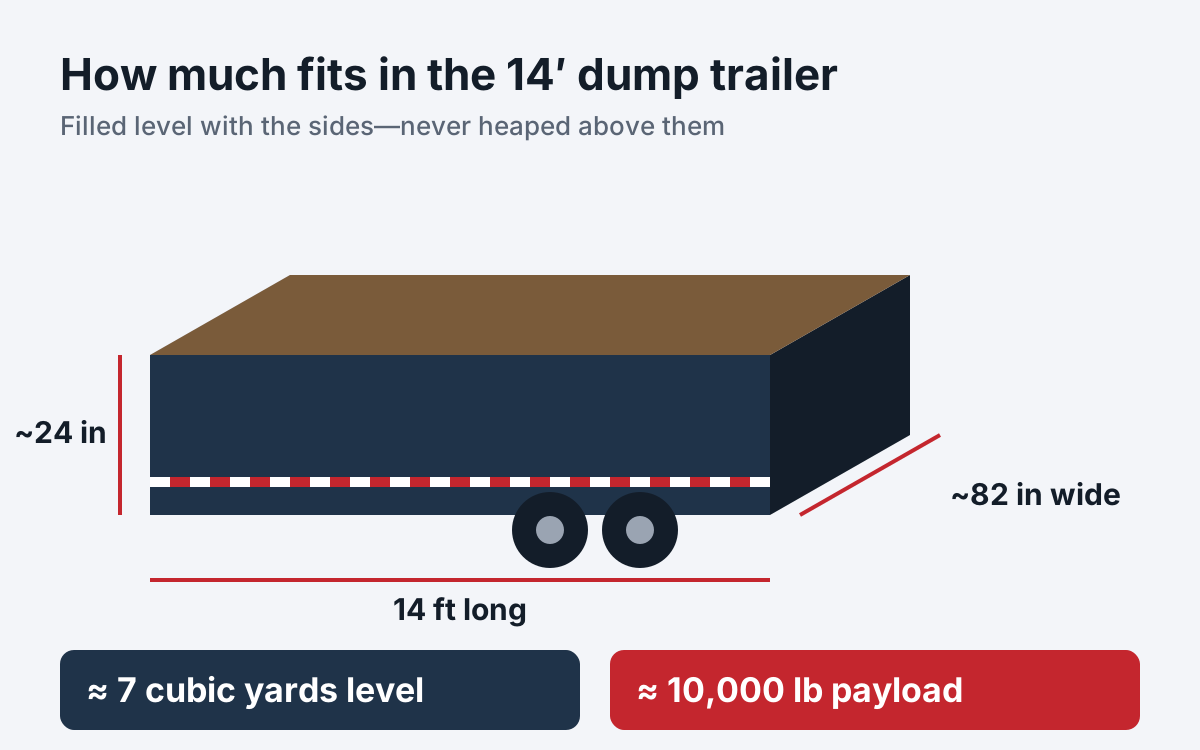
Volume: about 7 cubic yards
Our dump trailer’s bed is 14 ft long, about 82 in wide, with about 24 in sides. Filled level with the sides, that’s 14 × 6.8 × 2.0 ft ≈ 191 cubic feet, or about 7 cubic yards. Don’t heap material above the sides—it can blow out on the road, and the tarp needs to close.
Weight: about 10,000 lb of cargo
The trailer’s GVWR is 14,000 lb—the most it can weigh including itself. Its approximate payload, the cargo you can add, is about 10,000 lb.
Your vehicle is usually the real limit
A fully loaded dump trailer can weigh up to 14,000 lb. That’s more than many half-ton pickups and SUVs are rated to tow. Check your vehicle’s towing capacity and payload first—here’s how—and load only what your vehicle can safely pull.
How much of each material fits
Typical loose weights per cubic yard. Real loads vary—wet soil and debris weigh much more than dry—so treat these as rough planning numbers.
| Material | Weight per cubic yard | Roughly fits |
|---|---|---|
| Leaves, brush and yard waste (loose) | 150–500 lb | About 7 yd³ (space limit) |
| Wood mulch | 400–800 lb | About 7 yd³ (space limit) |
| Household junk and mixed cleanout debris | 300–600 lb | About 7 yd³ (space limit) |
| Renovation debris (drywall, wood, flooring) | 500–1,000 lb | About 7 yd³ (space limit) |
| Topsoil or fill dirt | 2,000–2,700 lb | About 4.5 yd³ (weight limit) |
| Sand | 2,600–3,000 lb | About 3.5 yd³ (weight limit) |
| Gravel or crushed stone | 2,600–3,000 lb | About 3.5 yd³ (weight limit) |
| Broken concrete or brick | 2,500–4,000 lb | About 3 yd³ (weight limit) |
“Weight limit” means the trailer’s approximate payload is reached before it’s full; “space limit” means it fills up first. Both assume your tow vehicle can handle the weight.
Tips for heavy loads
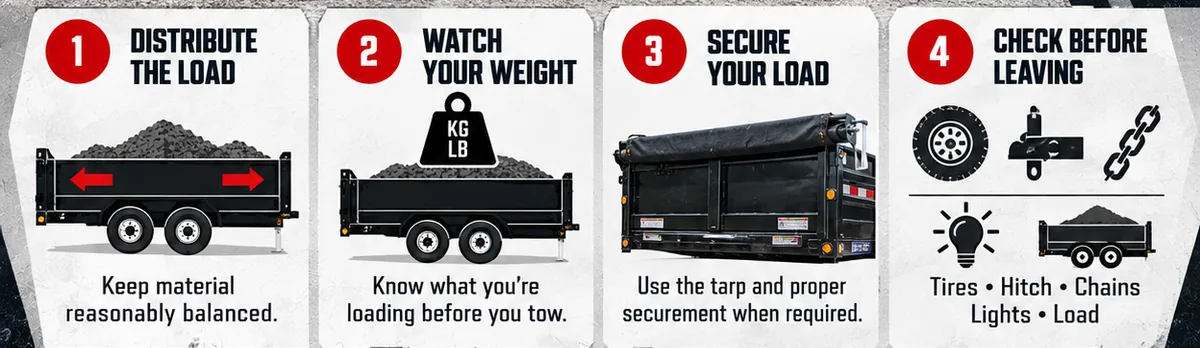
- Ask the yard for weight, not just yards. Landscape suppliers can usually tell you what a scoop weighs.
- Spread it evenly, with slightly more toward the front of the bed—never all at the back.
- Make two trips rather than overloading. It’s safer for you, your vehicle and the trailer.
- Tell us what you’re hauling when you request. We’ll flag anything that looks like too much for your setup.
Planning a load?
Send us your dates, what you’re hauling and your tow vehicle. We’ll review it personally and follow up.
More guides
All guides
What can you haul in a dump trailer?
Good loads, loads to ask about first, and tips for the disposal site.
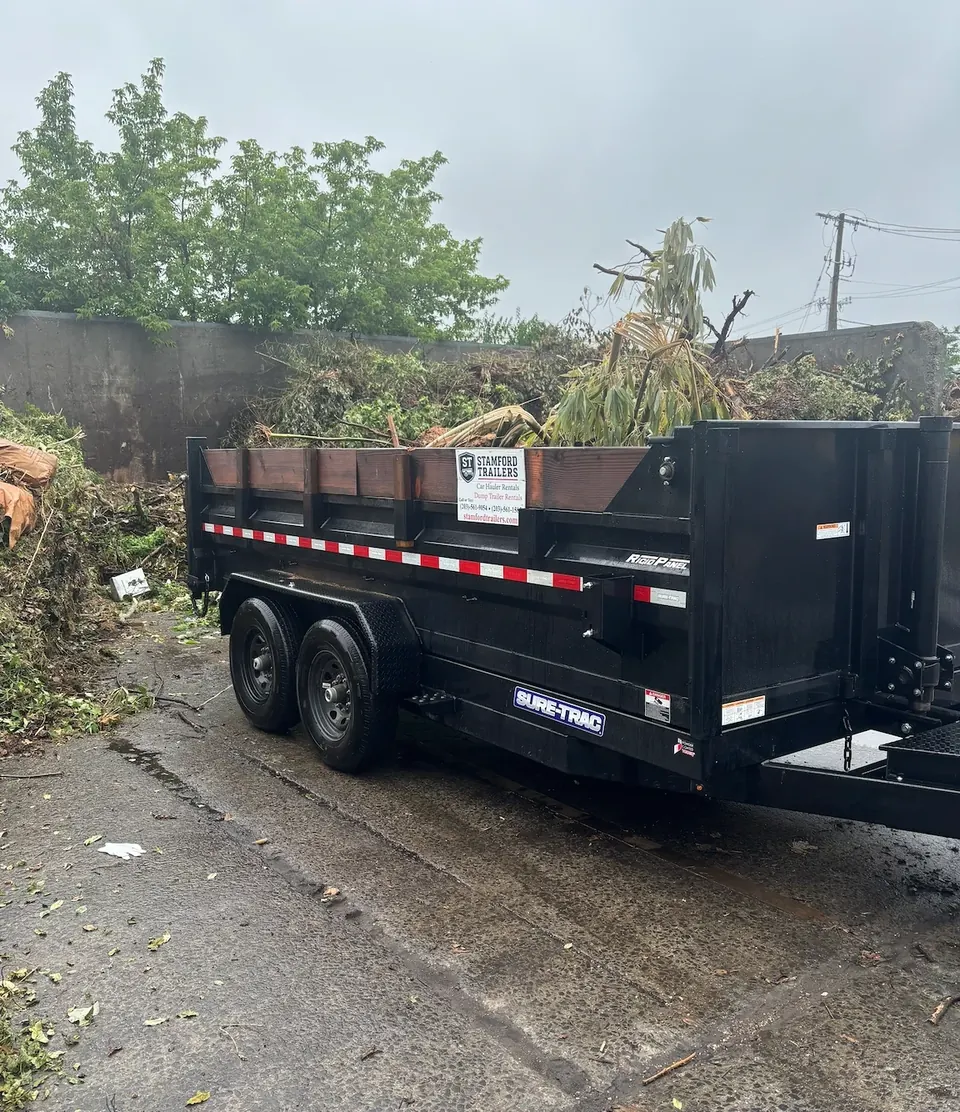
Yard cleanup: how much brush fits in a dump trailer?
Planning a spring or fall cleanup? How much brush, branches and leaves fit, how to pack it, and getting it to the drop-off.
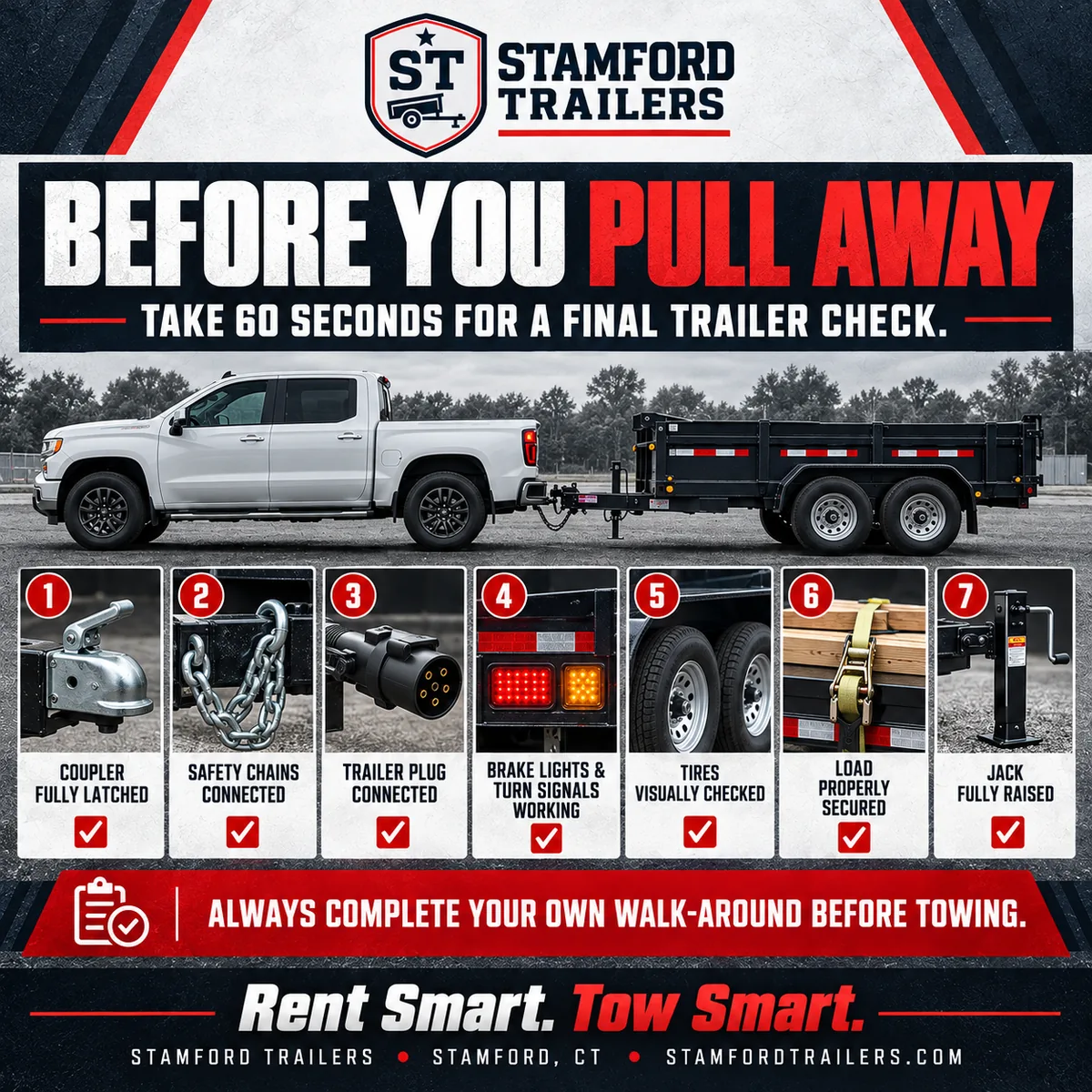
Before you pull away: the 60-second trailer check
Seven quick checks—coupler, chains, plug, lights, tires, load and jack—that prevent most towing problems.