
Can your vehicle tow it?
Choose a trailer based on your vehicle’s ratings—not its size. Here’s how to check before you book.
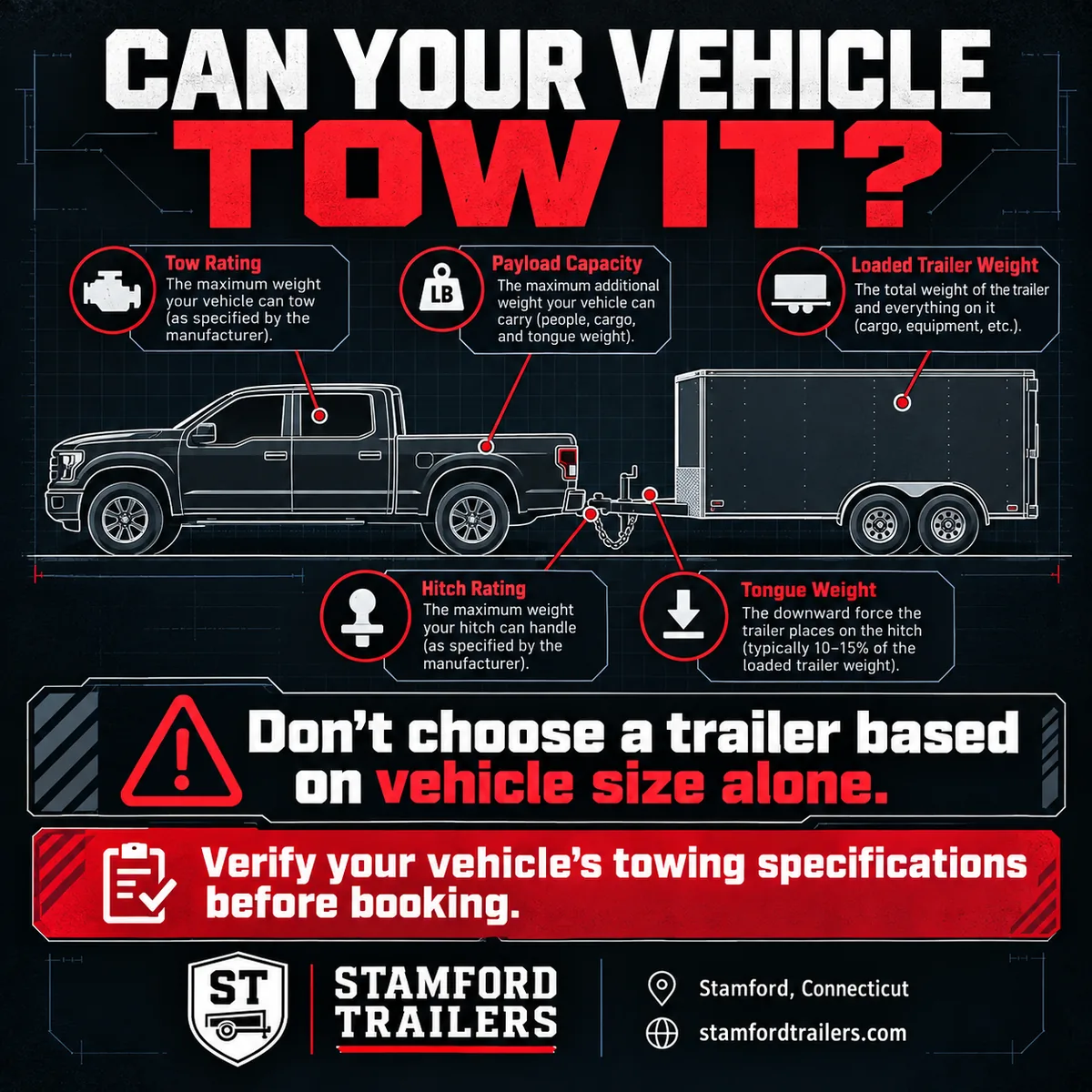
The five numbers that matter
| Rating | What it means | Where to find it |
|---|---|---|
| Towing capacity | The most your vehicle can pull, as rated by the manufacturer. | Owner’s manual or manufacturer’s towing guide |
| Payload capacity | The most your vehicle can carry—people, cargo and the trailer’s tongue weight. | Sticker on the driver’s door jamb |
| Hitch rating | The most your receiver, ball mount and ball can handle. The lowest-rated part sets the limit. | Label on the receiver and stamped on the ball and mount |
| Loaded trailer weight | The trailer’s own weight plus everything on it. | Trailer weight + your estimated load |
| Tongue weight | The downward force on your hitch—typically about 10–15% of the loaded trailer weight. | Estimate from the loaded weight |
Your loaded trailer weight must stay under your vehicle’s towing capacity and your hitch rating, and the tongue weight plus passengers and cargo must stay under your payload capacity.
What our trailers require
- 2-5/16″ hitch ball on a ball mount rated for the loaded weight
- 7-pin trailer connector that works (lights, turn signals, brakes)
- Working trailer brake controller—both trailers have electric brakes
- Safety chain attachment points on your hitch
GVWR is not your cargo limit
Our dump trailer has a 14,000 lb GVWR and the car hauler 7,000 lb. That’s the maximum the trailer can weigh fully loaded, including the trailer itself. Approximate payloads are about 10,000 lb and 4,915 lb. Your vehicle may limit you to much less.
Before you pull away
Take a minute for a walk-around every time you hook up:
- Coupler fully latched and locked on the ball
- Safety chains crossed under the tongue and connected
- 7-pin plug connected; brake lights and turn signals working
- Brake controller set for the load
- Tires look properly inflated and undamaged
- Load balanced and secured; tailgate or ramps stowed
- Tongue jack fully raised
Loading tips
- Balance the load side to side, with slightly more weight toward the front of the trailer.
- Know your weight. Soil, stone and wet debris are heavier than they look.
- Secure everything. Close the tarp on the dump trailer, and use rated tie-downs on the car hauler.
Not sure about your setup? Text us your vehicle’s year, make and model—or a photo of your hitch—at (203) 561-1585 and we’ll help you check.
Ready to haul?
Send us your dates and what you’re hauling. We’ll review your request personally and follow up with next steps.
More guides
All guides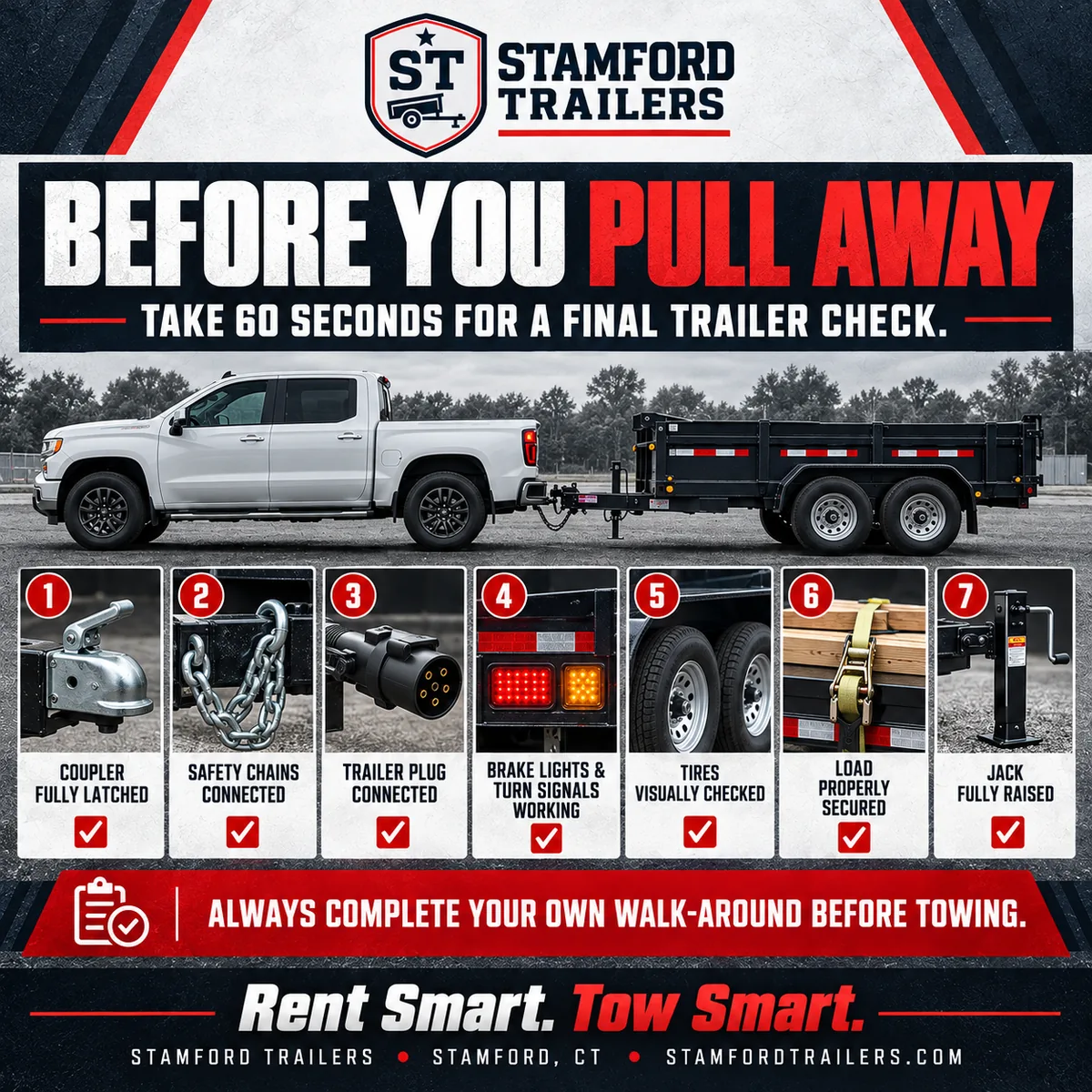
Before you pull away: the 60-second trailer check
Seven quick checks—coupler, chains, plug, lights, tires, load and jack—that prevent most towing problems.
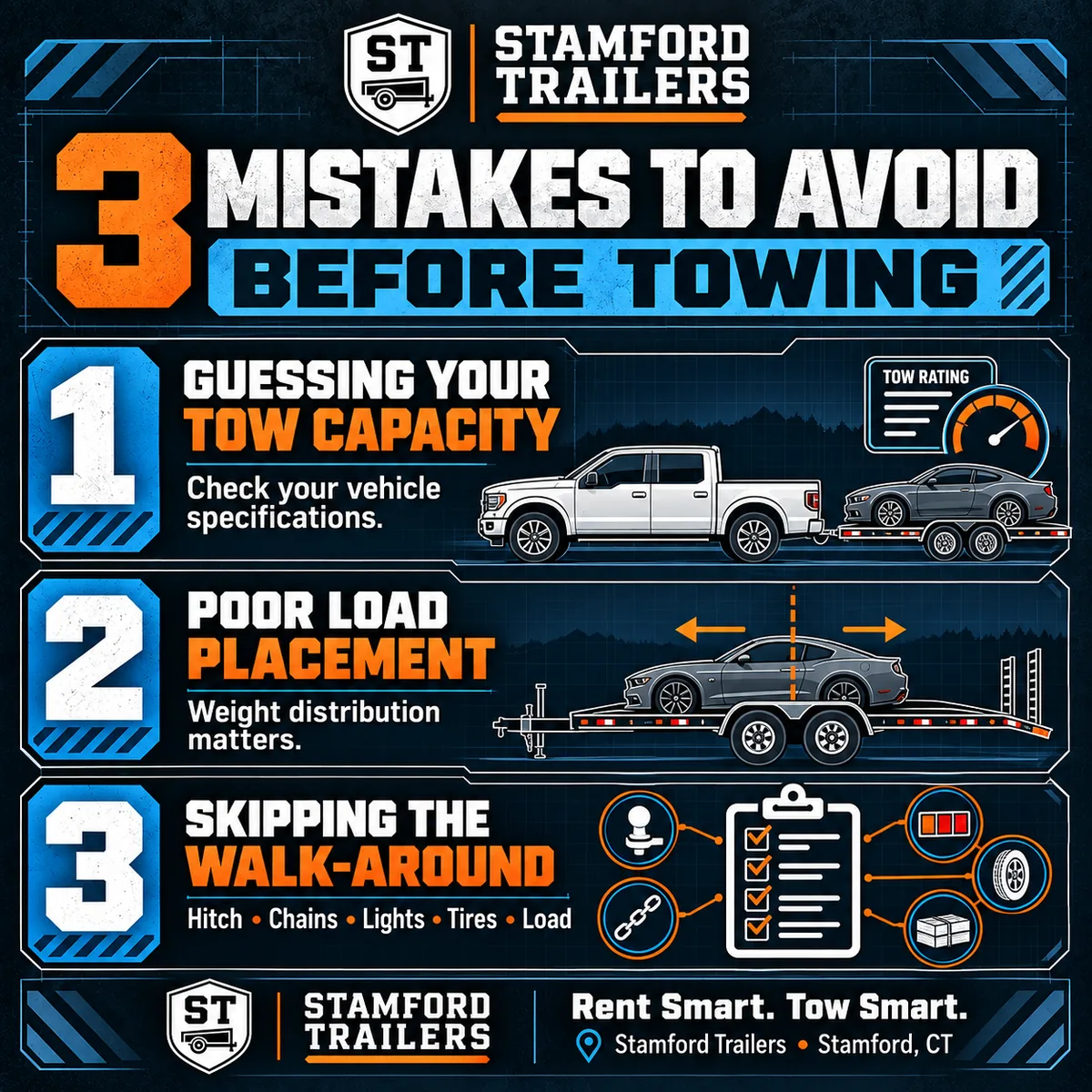
3 towing mistakes to avoid
Guessing your tow capacity, poor load placement and skipping the walk-around—and how to avoid each one.
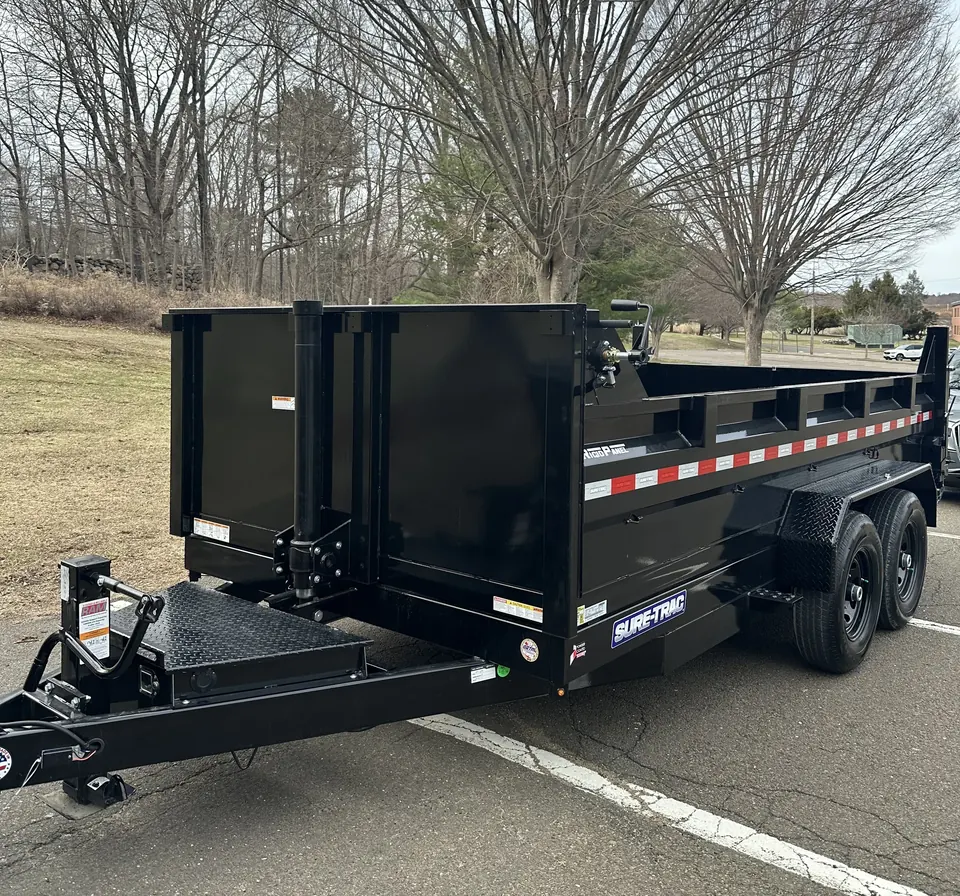
Trailer brake controllers, explained
What a brake controller does, how to tell if your truck has one, and how to set the gain before you tow.