
Moving a car on a car hauler: what to bring
A simple checklist for moving a project car, a non-runner or a new purchase on our 18′ car hauler.
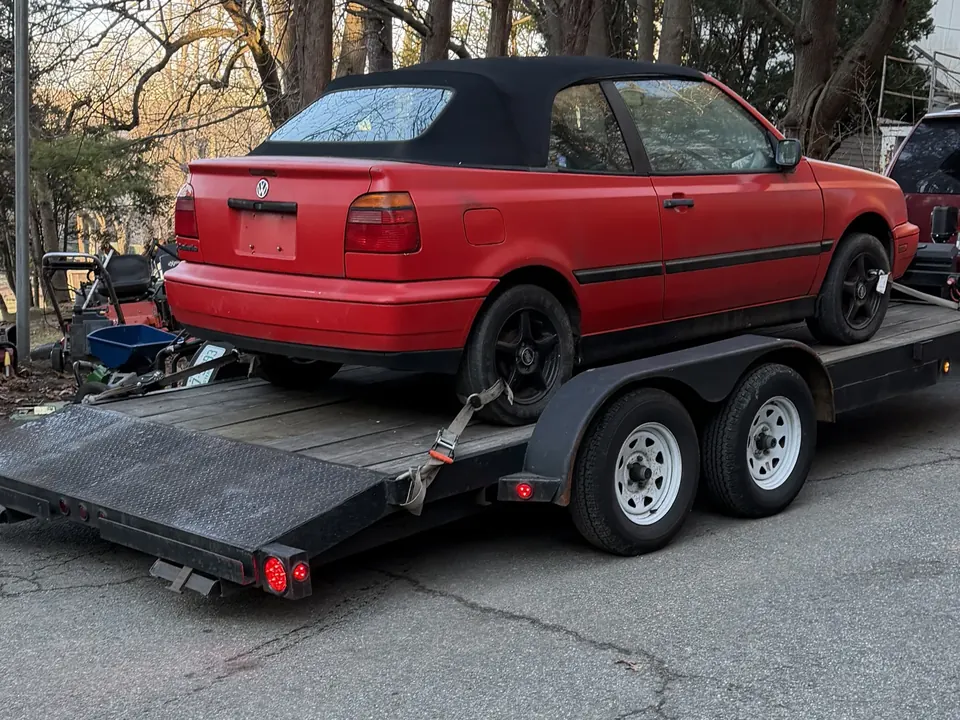
Moving a car yourself is straightforward with the right gear and a plan. Here’s what to have with you.
Before you go
- Know the car’s weight. Check the curb weight; it has to fit within the hauler’s payload and your tow vehicle’s ratings. Our guide to loading a car hauler lists typical weights.
- Check the route. Know where you’ll load and unload. A flat, firm spot makes ramps much easier.
- Ask about equipment. Tell us in your request if you need straps or a winch, and we’ll confirm what’s included before pickup.
What to bring
- Four rated tie-down straps (axle straps or wheel nets work best).
- Wheel chocks for the car once it’s on the deck.
- Work gloves and a flashlight.
- A helper to spot you up the ramps.
- For a non-runner: a way to get it up the ramps—a winch, a come-along, or enough people to push safely, plus keys so the steering unlocks.
Loading in short
- Keep the trailer hitched on level ground, truck in park.
- Set the slide-in ramps square to the tires.
- Drive or winch up slowly with a spotter.
- Stop with roughly 60% of the car’s weight ahead of the trailer axles.
- Car in park with the parking brake on, then strap all four corners.
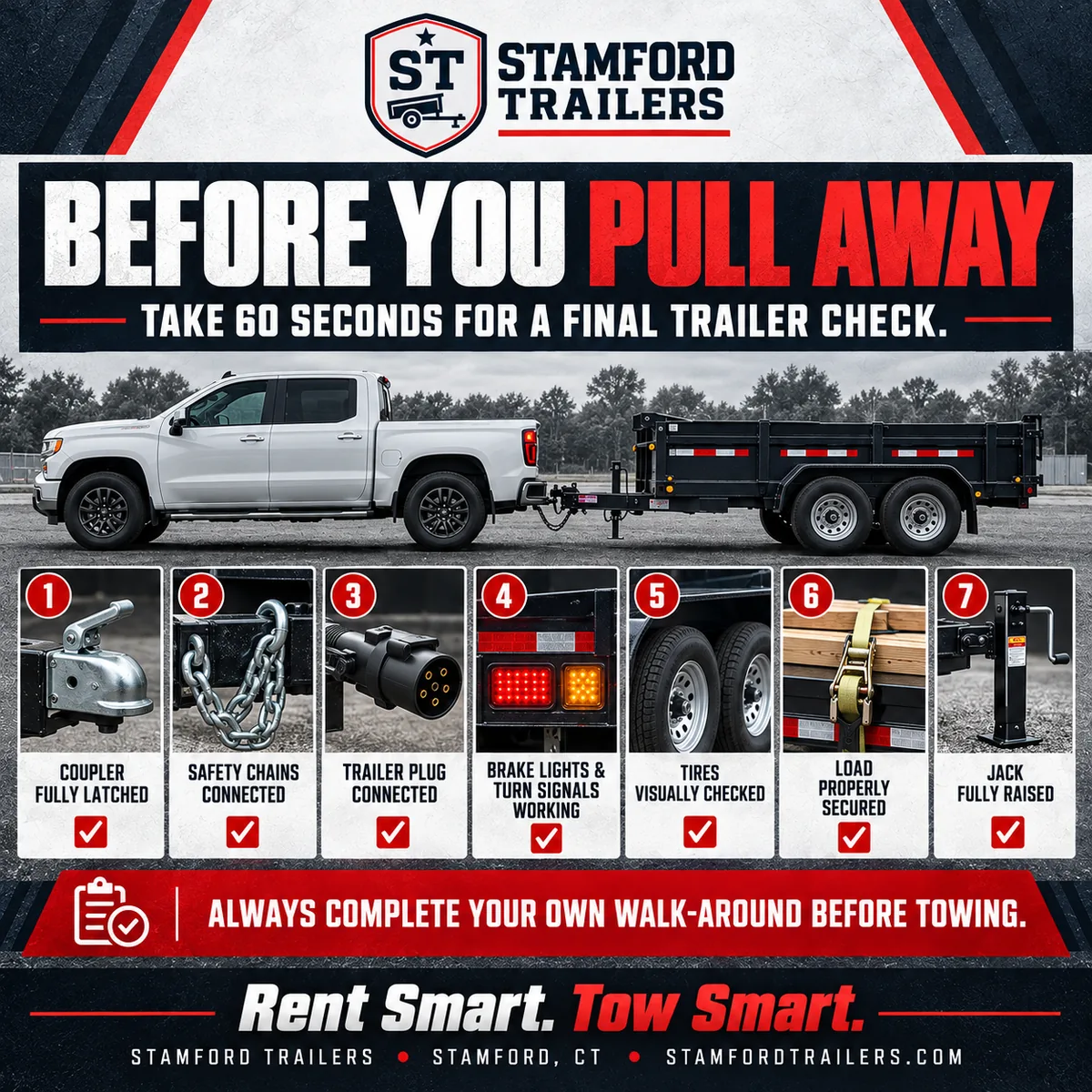
- Stow the ramps and do the 60-second trailer check.
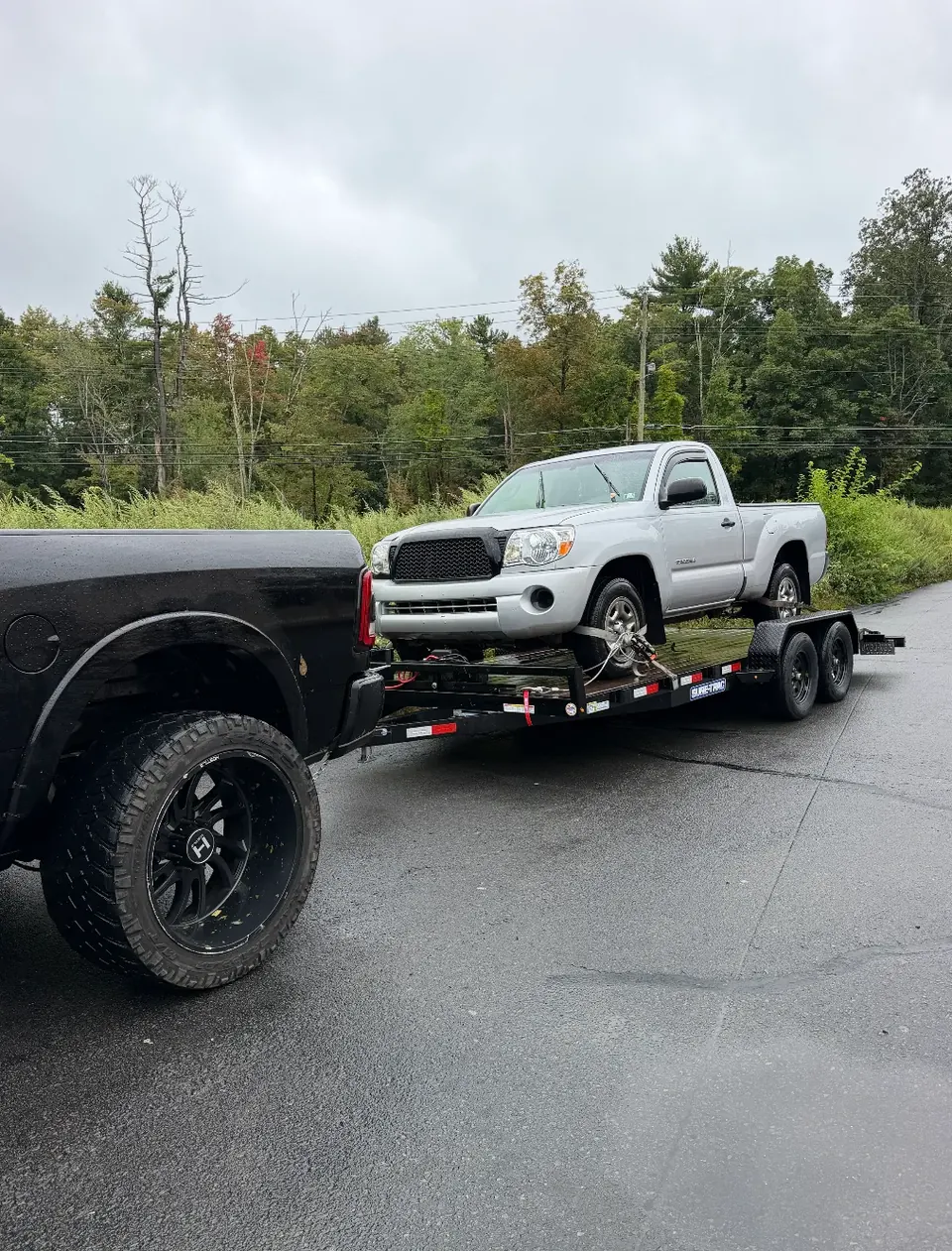
After a few miles
Pull over somewhere safe and re-tighten the straps—they always settle a little.
The car hauler is $135 per day. Request your dates or call (203) 561-1585.
Planning a rental?
Send your dates, what you’re hauling and your tow vehicle. A real person reviews every request.
More guides
All guides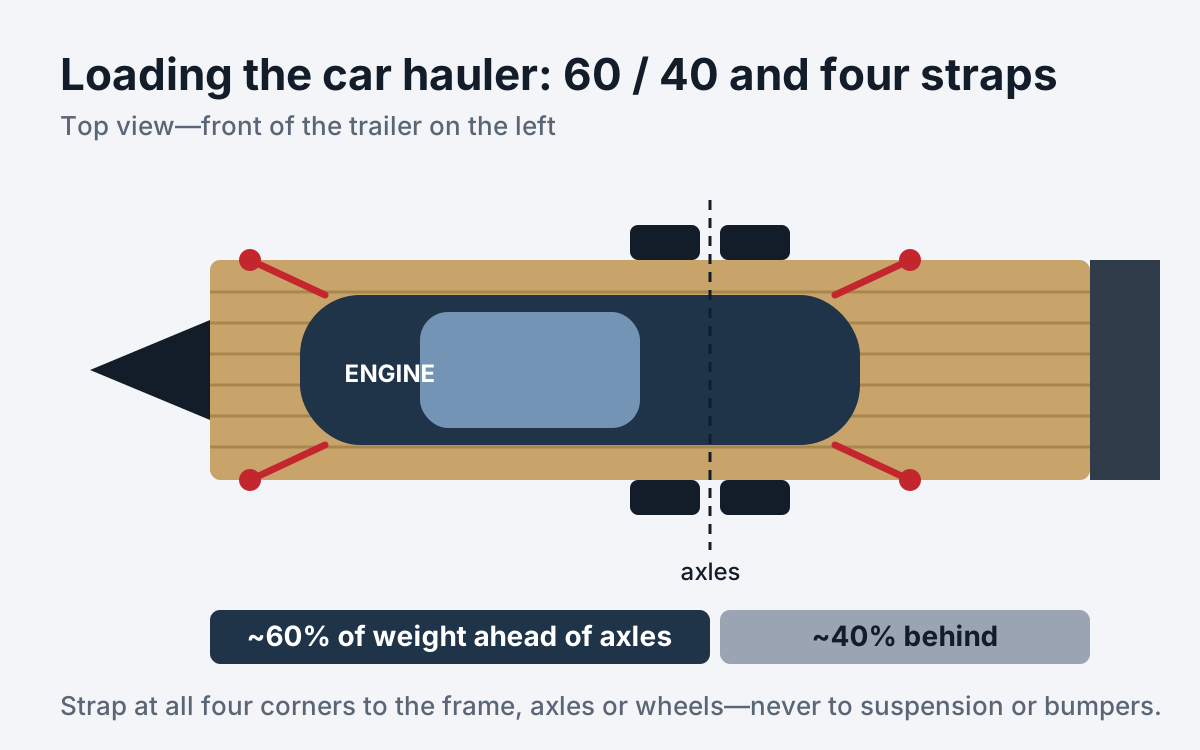
Car hauler
How to load a car hauler safely
Vehicle weight, balance, tie-downs and the ramps—step by step.
Towing & safety
Before you pull away: the 60-second trailer check
Seven quick checks—coupler, chains, plug, lights, tires, load and jack—that prevent most towing problems.
Towing & safety
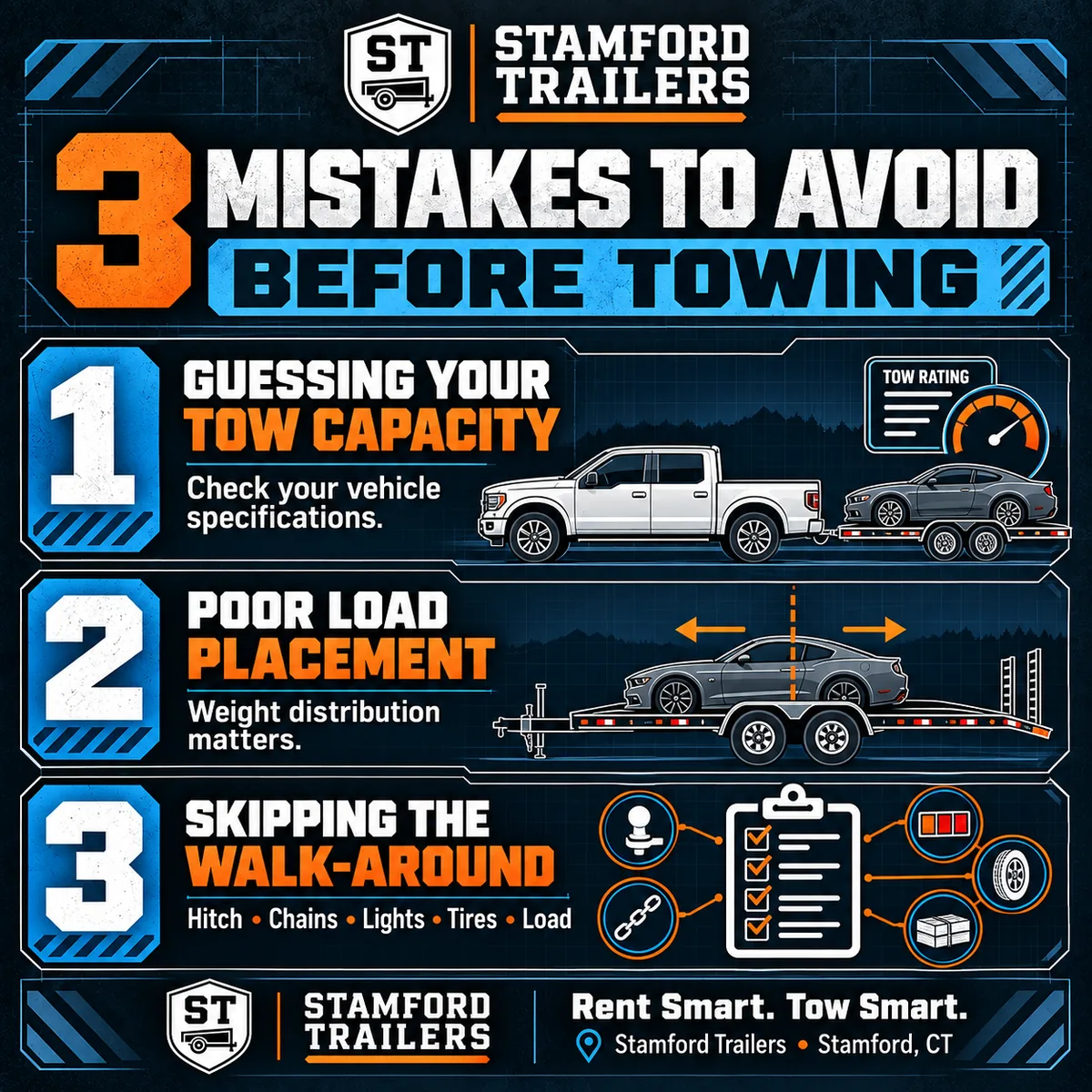
3 towing mistakes to avoid
Guessing your tow capacity, poor load placement and skipping the walk-around—and how to avoid each one.