
What you need before you rent a trailer
The driver, vehicle and hitch requirements for our dump trailer and car hauler—and what to have ready when you request.
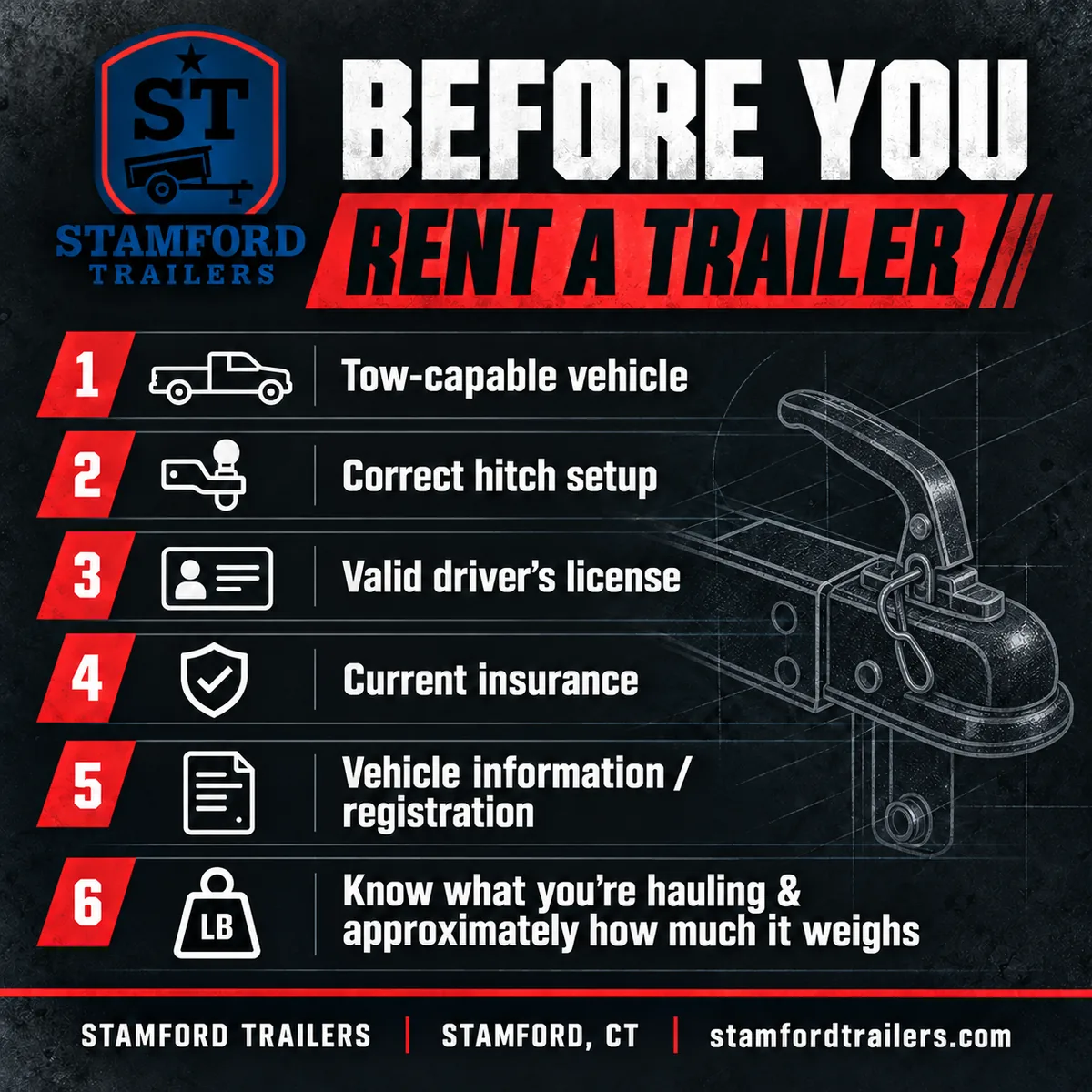
Having these ready makes your request quick to approve and your pickup quick to finish.
The driver
- Age 25 or older, with a valid driver’s license.
- Current auto insurance on the vehicle you’ll tow with.
The tow vehicle
- Towing capacity that covers the loaded trailer—not just the empty one. A loaded dump trailer is much heavier than it looks. Here’s how to check your ratings.
- A 2-5/16″ hitch ball on a ball mount and receiver rated for the load.
- A working 7-pin trailer connector (lights, signals and brakes).
- A working brake controller. Both trailers have electric brakes. Not sure if you have one? Look for a small control box under the dashboard, or check your truck’s trailer-brake setting.
What to tell us in your request
- Your dates and pickup and return times (we’re open 7:00 AM–7:00 PM every day).
- Your tow vehicle’s year, make and model.
- What you’re hauling and roughly how much it weighs. It’s the most useful thing you can tell us—it’s how we make sure the trailer and your vehicle are a good match.
What it costs
The dump trailer is $155 per day and the car hauler is $135 per day, billed per 24 hours from your pickup time, plus 6.35% CT sales tax and a $175 refundable security deposit. You’ll see an itemized estimate before you send anything—try the estimator.
Then what?
We send the rental agreement right after your request, and a real person reviews it. If everything checks out, we’ll send a secure payment link and confirm your pickup time. Nothing is reserved until it’s confirmed. Request a rental when you’re ready.
Planning a rental?
Send your dates, what you’re hauling and your tow vehicle. A real person reviews every request.
More guides
All guides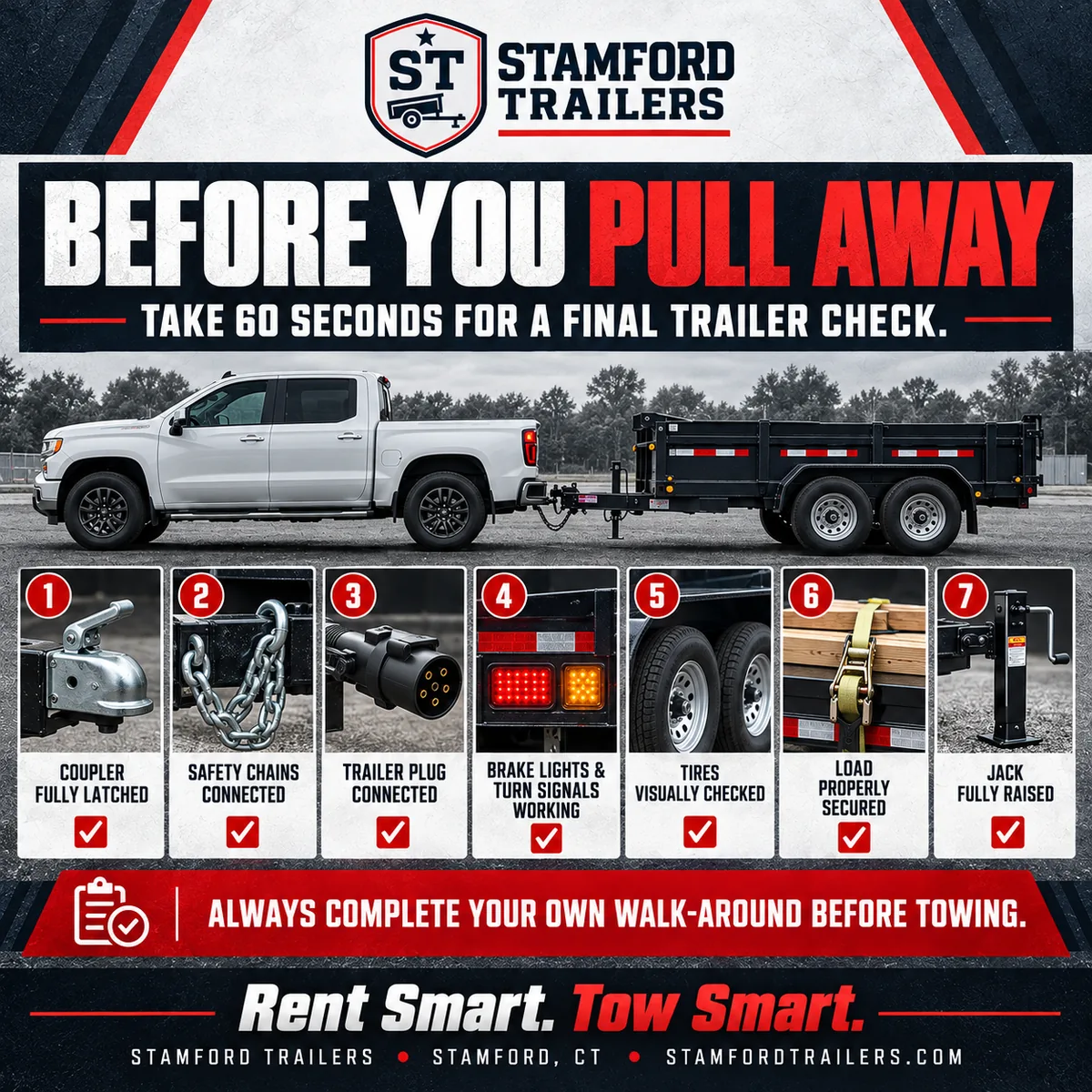
Before you pull away: the 60-second trailer check
Seven quick checks—coupler, chains, plug, lights, tires, load and jack—that prevent most towing problems.
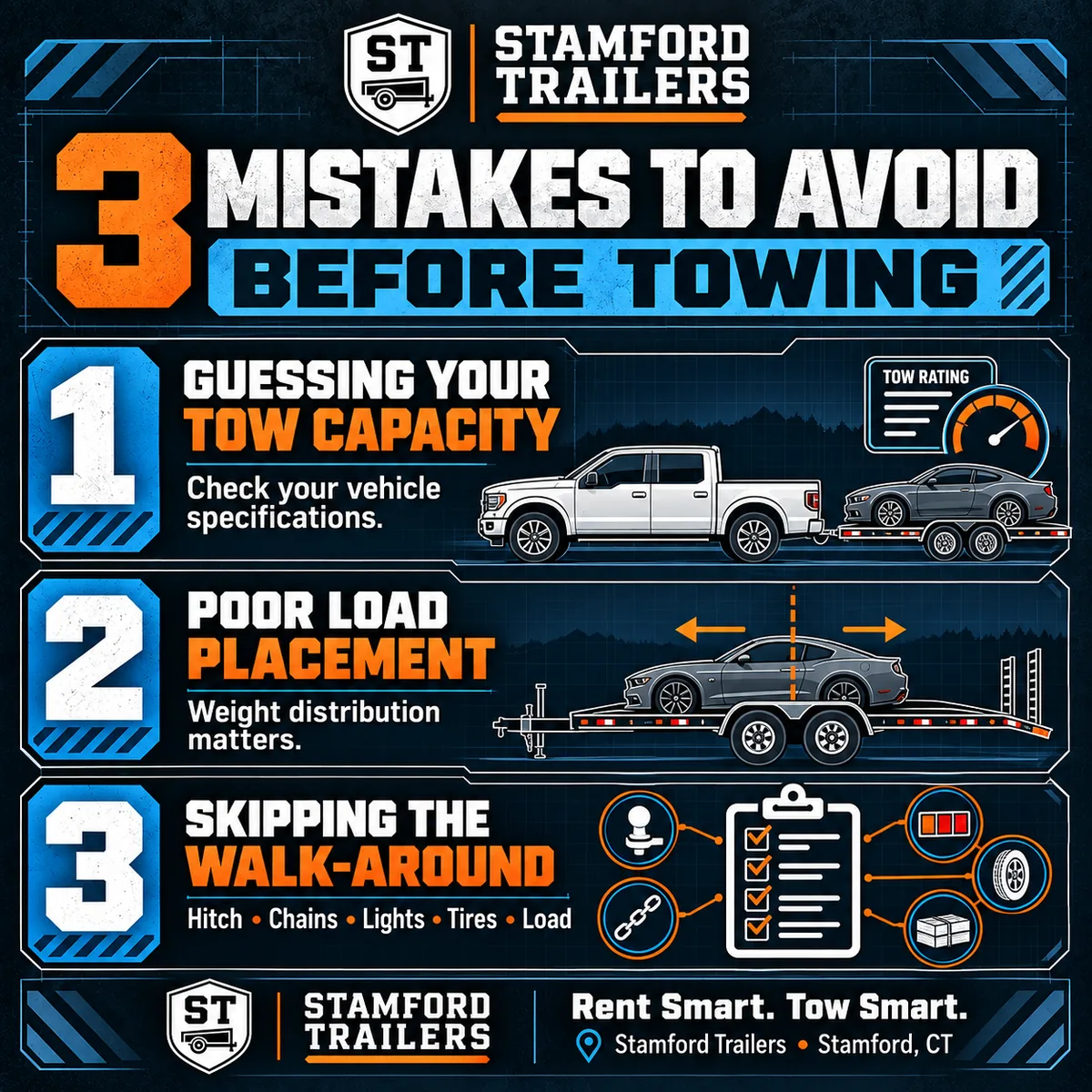
3 towing mistakes to avoid
Guessing your tow capacity, poor load placement and skipping the walk-around—and how to avoid each one.
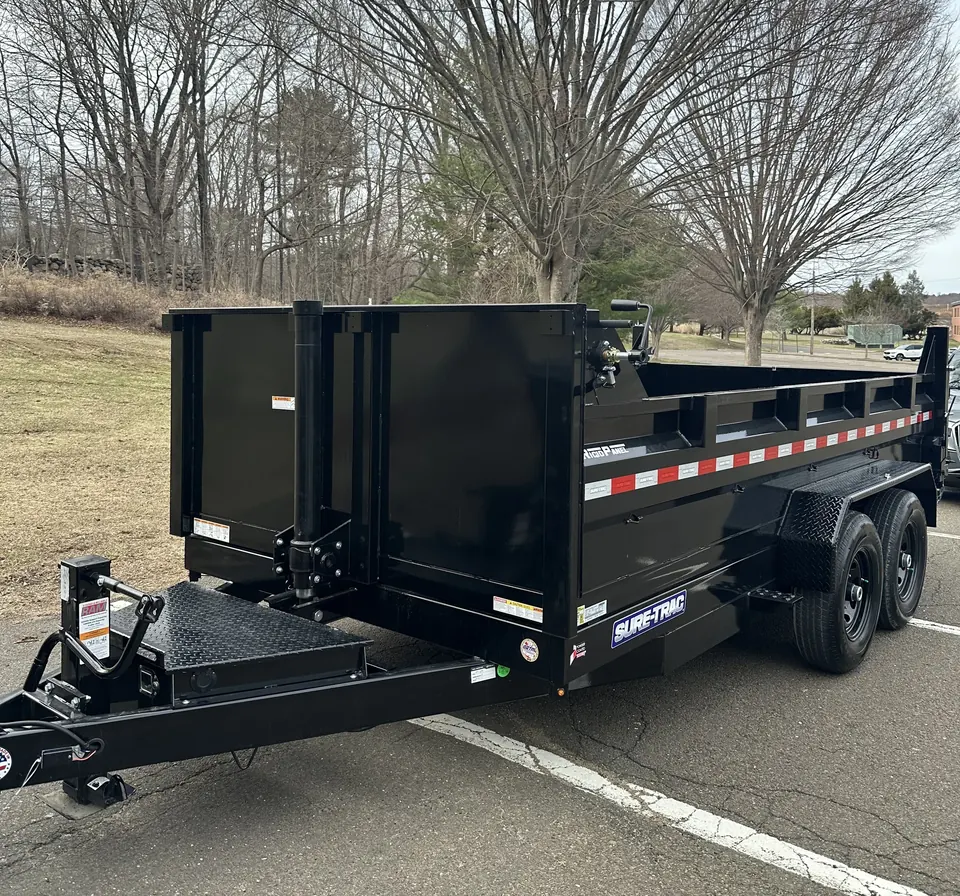
Trailer brake controllers, explained
What a brake controller does, how to tell if your truck has one, and how to set the gain before you tow.